Skip to content

Seawalls

Chemical Grout Injection

Sealing the path your yard is escaping through — injected through small ports instead of excavated, so your landscaping survives the repair.

If there is one repair that saves Northeast Florida waterfront owners the most money, it is this one — provided it happens early enough.

The problem it solves

A seawall is not watertight. Water moves through the joints between panels, through cracks, and through gaps at the toe, and it moves in both directions with the tide. On the way out it carries fine soil with it.

A teaspoon per tide is nothing. A teaspoon per tide for fifteen years is a void the size of a car behind your wall.

You find out when a patch of lawn drops, a paver settles, a pool deck cracks, or the ground near the wall goes soft underfoot. By then the wall has been exporting your property for a long time, and the depression you can see is the top of something considerably larger.

The critical point: the wall itself can be structurally perfect while this is happening. Owners look at a sound, straight, uncracked seawall and conclude the sinking lawn must be unrelated. It is not unrelated. It is the wall.
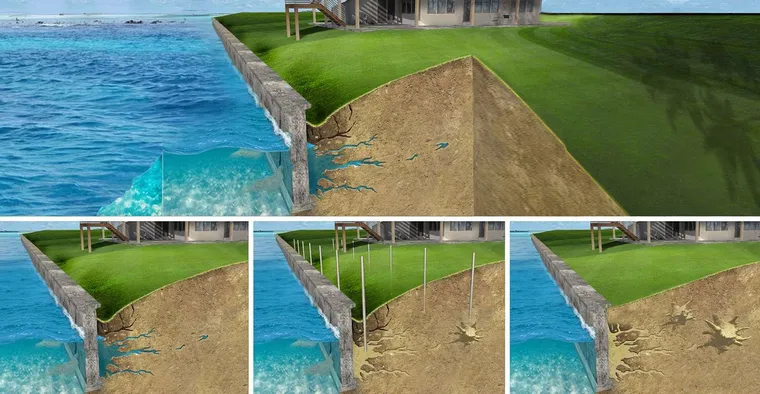
Diagram sequence showing soil washing out from behind a seawall to form voids, then polyurethane grout injected through the wall to seal the leak path and bind the soil Diagram
How soil leaves through a wall, and what grout injection does about it

How injection works

Polyurethane grout is injected under pressure through small ports drilled through the wall or placed into the soil behind it. On contact with water and soil it reacts, expands, and sets — filling the void space, binding loose material, and sealing the flow path the water was using.

Two things happen at once: the leak closes, and the loose soil in the immediate zone is bound into a mass that no longer migrates.
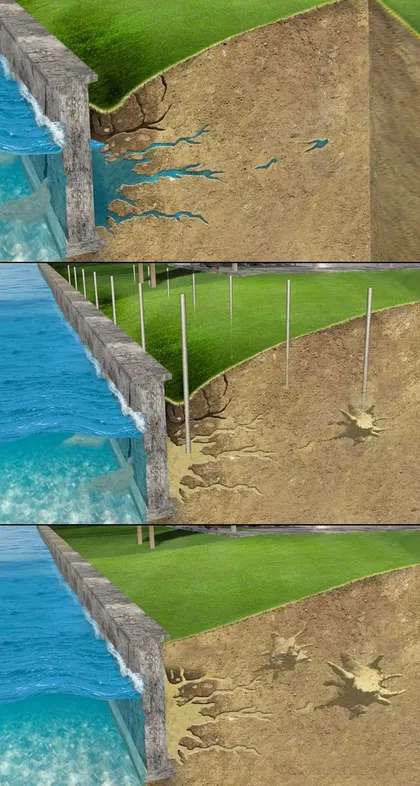
Vertical diagram sequence showing a seawall losing soil behind it, grout being injected, and the stabilised result Diagram
Seawall restoration by grout injection, stage by stage

The grouts used for this are selected for marine conditions — they react in the presence of water, which is exactly the condition that defeats cementitious materials in this application.

Why owners choose it

No excavation. This is the headline. Repairing soil loss the traditional way means opening the ground along the wall — which means the irrigation, the landscaping, the lighting, the pavers and the grade all come up and have to go back. On a finished waterfront property that restoration frequently costs more than the structural repair itself. Injection goes through ports.

Fast. Days, not weeks. No demolition, no structural concrete curing.

Works below the waterline. The reaction is water-activated, so the method functions in exactly the saturated conditions where the problem lives.

Targeted. Grout can be placed where the voids actually are rather than treating the whole wall uniformly.

What it does not do

We would rather tell you this up front than have you find out after paying for it.

  • It does not re-anchor a leaning wall. Rotation is a tieback problem and needs tieback work.
  • It does not restore lost embedment. If scour has taken the depth out from under the wall, grout behind the wall does not give it back.
  • It does not repair a failed cap. That is concrete cap and wall repair.
  • It does not rescue a wall that is structurally finished. On a wall headed for replacement, injection is money spent on something you are removing.

The difference timing makes

Soil loss compounds. The repair that is cheap this year is a structural problem in five, and at some point the inexpensive option stops being available at all.
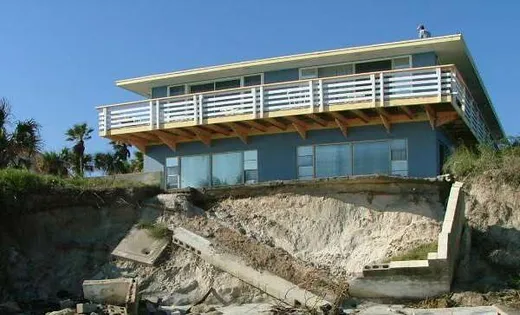
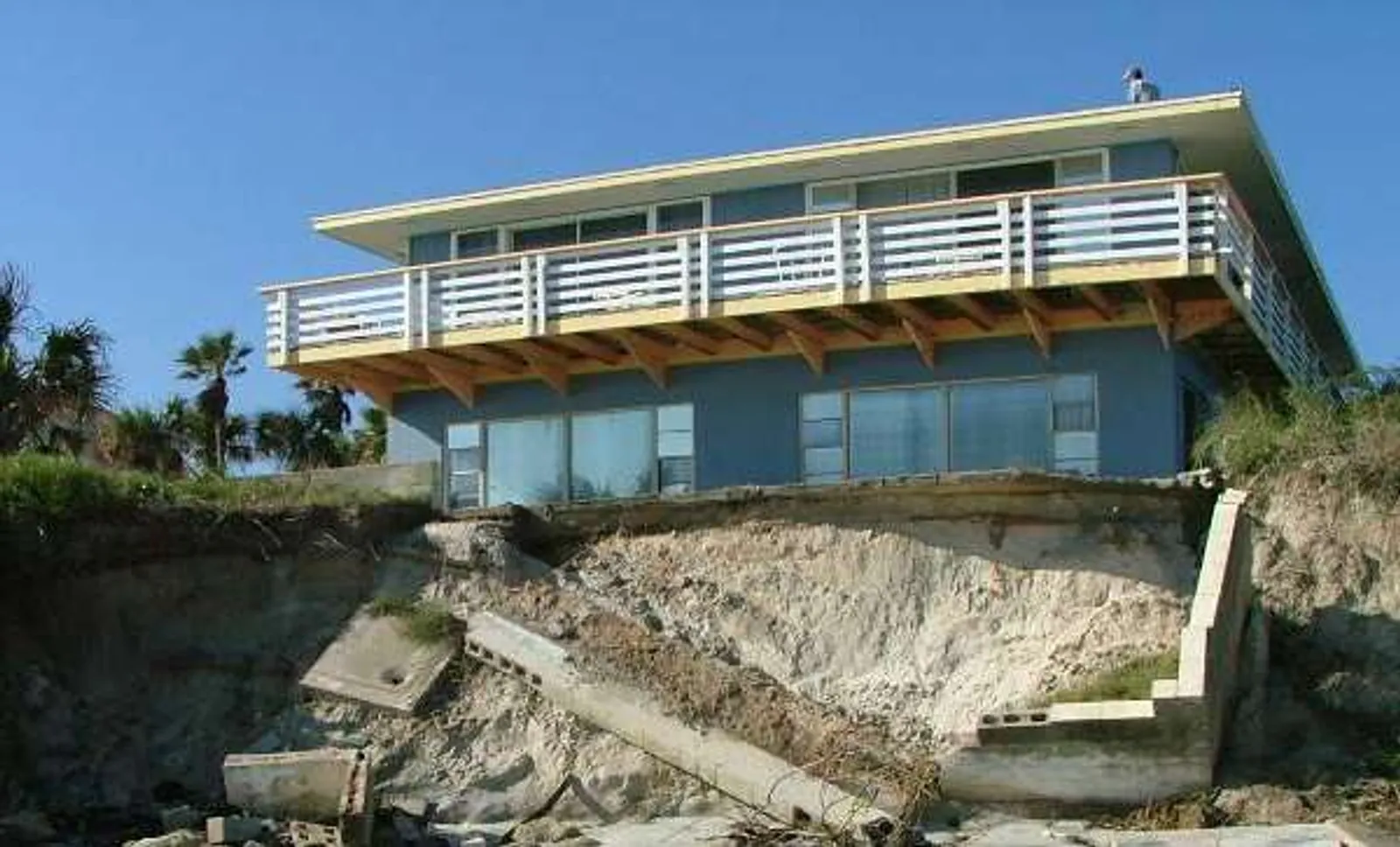
Building on a bluff above a collapsed retaining wall, with the ground beneath it undermined and broken concrete fallen onto the shore Left too long
What a failed wall looks like: structure undermined, ground lost beneath it
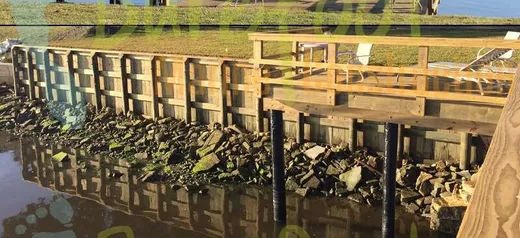
Timber bulkhead with armour stone riprap placed along its toe, lawn running down to the wall and a railed deck above Caught in time
Timber bulkhead with riprap toe protection

Sequence matters

Grout injection and void filling and soil stabilization are different repairs and they belong in a specific order.

Seal first, fill second. Filling a void behind a wall that is still leaking means the new material becomes the next thing the tide carries away. We have been called to properties where that was done by someone else and the owner is paying twice for the same ground.

On most jobs both happen in the same mobilisation, in the right sequence.

How we scope it

We start by establishing where the voids are and where the water is moving, because injecting blind wastes material and misses the problem. That is part of a marine inspection, and it also answers the larger question of whether injection is the right repair at all or whether the wall has a structural problem that needs addressing first.

If your lawn is sinking near the wall, call (904) 327-3931 or send photos. This is one of the few problems in marine construction where acting early changes the cost by an order of magnitude.

Frequently asked questions

Will grout injection fix my seawall?
It fixes one specific thing extremely well: the path water and soil are moving through. It does not re-anchor a leaning wall, restore lost embedment, or rebuild a failed cap. On walls whose structural problem is soil loss through joints, it is often the whole answer. On walls with structural failure it is one part of a larger scope — and sometimes the honest answer is that the wall needs replacing and grout would be money spent on a structure that is leaving anyway.
How long does the injection work take?
Far less time than people expect, which is one of the method's advantages. Most residential jobs are measured in days rather than weeks, because there is no excavation, no demolition and no curing of structural concrete. The exact duration depends on the length of wall and the extent of the voids.
Will it damage my lawn, irrigation or pavers?
The method exists largely to avoid that. Injection is done through small ports rather than by opening the ground, so finished surfaces, irrigation lines, mature plantings and hardscape generally stay where they are. That is the main reason owners choose it over excavate-and-backfill.
How soon can I use the area afterwards?
Polyurethane grouts react and set quickly compared with cementitious materials. We will tell you the specific return-to-service time for the product and conditions on your job.
Does the grout harm the water or marine life?
Products used for marine and below-water injection work are selected for that application. We will tell you what we are using on your project and why. Work at the water's edge also sits inside the regulatory framework described on our permitting page.

Last reviewed October 2026 by Barefoot Marine Construction. Permit requirements and agency rules change — confirm current requirements with the reviewing agency before you plan work.

What customers say about this work

Unedited reviews from our Google Business Profile, where all 22 can be read in full.

Read them on Google
  • Rick and crew showed up during a very trying time when our bulkhead contractor, having demolished our existing bulkhead, proceeded to go bankrupt. We were left stranded with no warning and no protection from erosion to our yard.

    Rick's crew immediately went to work stabilizing the shoreline.

    They went above and beyond to work with our previously approved permit and engineering and even used the already purchased vinyl sheeting onsite. We did not feel any stress during the build, the crew showed up every morning on time, and kept the site clean and organized. They actually worked and did not stand around half the day drinking pop and playing with their phone. The price was competitive, the workmanship was excellent, and the billing was always fair and honest - we never felt over exposed. Rick takes a lot of pride in his work and wants his customers to be just as happy. This is our fourth bulkhead and you will not find a better contractor.

    Tom Snyder

    2 years ago Google review

  • When we found a broken bulkhead tieback rod, we were relieved to discover Barefoot Marine, a trusted name in marine construction and bulkhead repair. Rick quickly visited our property and recommended installing new stainless steel tieback rods alongside the old ones, paired with an updated anchor system. This smart, cost-effective solution was less invasive and preserved our seawall’s integrity, adding years to its lifespan. Despite their busy schedule with larger marine projects, Rick kindly worked our bulkhead repair into their timeline. The team’s professionalism, quick response, and solid workmanship shone through, delivering an affordable fix that enhanced the look of our waterfront property. We’re grateful for Barefoot Marine’s reliable service and highly recommend them for seawall repairs, tieback rod replacements, or any marine construction needs. Their quality work and customer care make them a top choice!

    John DeSalvo

    a year ago Google review

  • I was in need of a seawall in my backyard to stop the erosion into the retention pond. I did my research before hiring a company, and I am so happy that I selected Rick Powell and his team at Barefoot Marine. They kept me informed at each phase, and at the end, I was 100% satisfied with the quality of work, as well as the value delivered. My backyard is now the envy of the neighborhood. I highly recommend Rick and his team.

    Positive: Responsiveness, Quality, Professionalism, Value

    Andrew Bonderud

    3 years ago Google review

Get a free estimate on your project

Send us a few photos and what you're seeing, and we'll tell you what it needs — repair, replacement, or just monitoring.

Certified General Contractor #1533461 · Workers' Comp + USL&H Insured · Serving Northeast Florida since 2009