Skip to content

Dock Construction

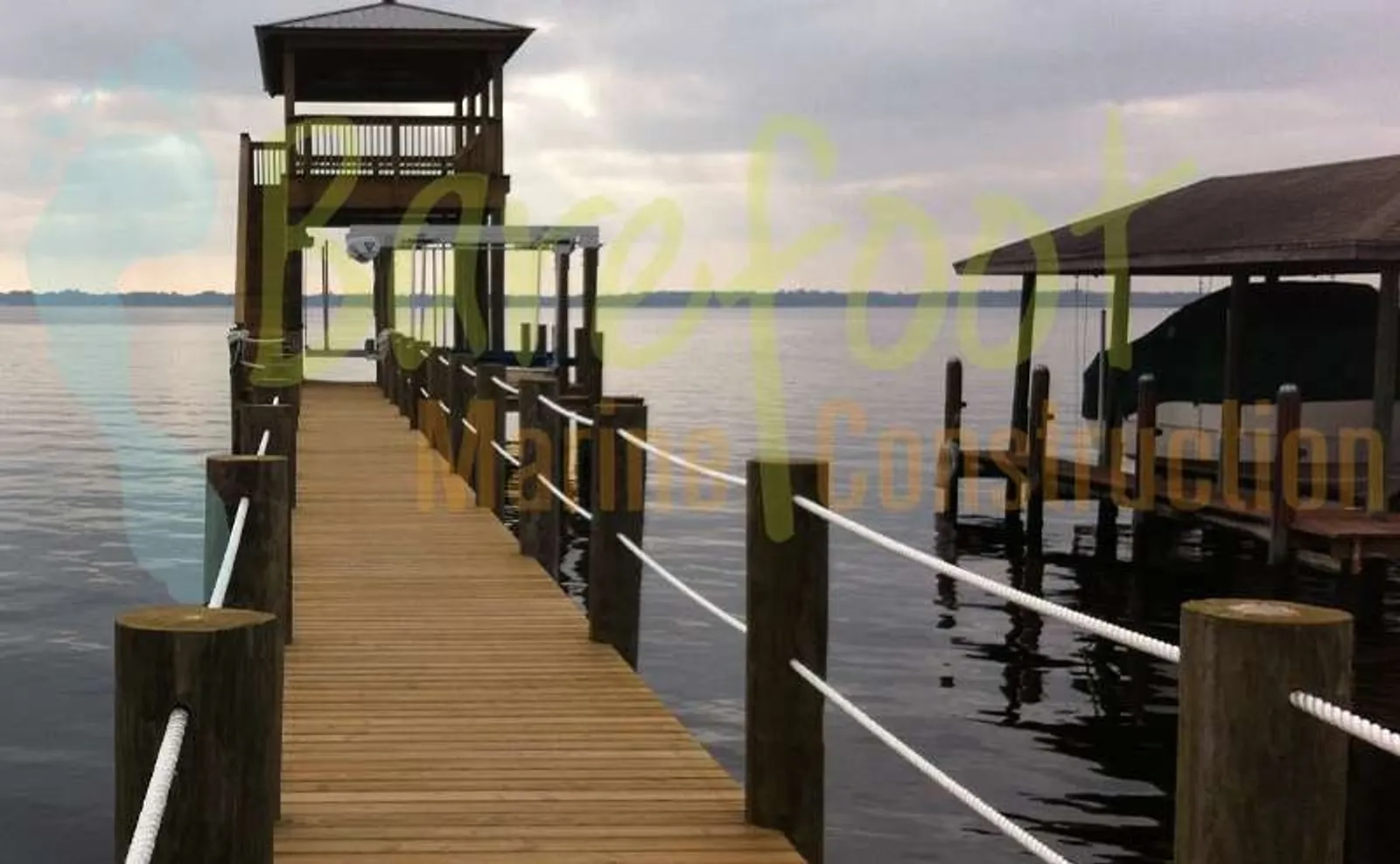
Custom Docks

Designed around your water, not around a catalogue. The questions we ask before drawing anything.

A good dock is a solved problem, not a product. The solving happens before any material is ordered, and it comes from a handful of questions about your property and how you use the water.

What we ask first

How do you actually use the water? A fishing dock, a dock for a centre console you take out most weekends, a dock that is mostly for sitting on with a drink at sunset, and a dock that has to take a large vessel on a lift are four different structures. The honest answer here shapes everything.

What boat — now and next? Draft decides the water depth you need, which decides how far out the dock has to go. Length, beam and weight decide slip layout and lift sizing. If you plan to move up a size in a few years, designing for it now is far cheaper than rebuilding later.

Where is usable depth? We establish where your water actually gets deep enough at low tide. This is the biggest single driver of layout and cost, and it is why two neighbouring lots can get very different estimates.

What is the tidal range here? It determines deck elevation and whether a floating section makes sense.

What is your exposure? Fetch, prevailing wind, channel wake. Exposure drives framing, connections and how the structure handles storms.

What does the shoreline do? Where the bulkhead or seawall sits, how the dock ties into it, grade at the landward end, and access for construction.

What will the permits allow? Length, footprint, configuration and covered structures are all subject to agency review — see dock permits. There is no point designing something that cannot be built.

Layout decisions

Walkway length and width. Length is set by water depth. Width is a usability choice — a wider walkway costs more and is much more pleasant if you are carrying coolers, rods and gear, which you will be.

Terminal platform. The business end. Size it for what happens there: fishing, boarding, seating, cleaning fish, or all of it.

Slip configuration. Parallel, perpendicular, or a slip between piles, driven by the vessel and by how much room the site and permits allow.

Fixed, floating, or both. Fixed structures are simpler and more durable. Floating sections solve boarding where tidal range is significant. A fixed walkway to a floating terminal is a common and effective hybrid.

Covered or open. A roof changes the permitting picture and adds structural demand — but it also changes how much the dock gets used in July. See boat houses and boat lifts.

Accessories. Dock boxes, benches, fish cleaning tables, single and double rails. Worth planning in rather than adding on, because mounting points and structure are easier to provide at build time.

Construction

Piles driven to adequate penetration for the loads and the soils — see pile driving — framing connected with hardware rated for a marine environment, decking selected for the way you use the dock, and the shore-end tie-in detailed properly against the wall.

Fasteners and connections are where docks fail first in brackish water. Specification there is not the place to economise, and it is invisible in a finished photograph, which is exactly why it is worth asking about.

Costs and timelines

The variables are on the dock cost page. Permit review is normally the longest item on the schedule.

Call (904) 327-3931 or tell us about your property.

Frequently asked questions

What makes a dock custom rather than standard?
Mostly that it is laid out from your site's constraints rather than fitted to a template. Water depth, the distance to usable depth, tidal range, exposure, the shape of your shoreline, how you actually use the water, and what the permits allow all shape the result. Two docks on the same street that look similar often have quite different layouts for good reasons.
Can you design around a boat I do not own yet?
Yes, and it is worth telling us. Draft, length, beam and weight affect water depth required, slip layout, and lift sizing. Designing for the boat you plan to buy rather than the one you have now is far cheaper than modifying the dock afterwards.
Can a dock have a roof or boathouse?
Yes, and both have permitting implications beyond a bare dock — covered structures over water are generally reviewed more closely, and local rules on height and footprint apply. Confirm current requirements with the reviewing agency. See boat houses and boat lifts.
How far out can my dock go?
That is set by the permitting agencies rather than by preference, and the limits depend on the waterbody, navigation, submerged resources and local rules. It is one of the first things established during design, because it determines whether the layout you want is achievable at all.

Last reviewed October 2026 by Barefoot Marine Construction. Permit requirements and agency rules change — confirm current requirements with the reviewing agency before you plan work.

What customers say about this work

Unedited reviews from our Google Business Profile, where all 22 can be read in full.

Read them on Google
  • We just completed a total rebuild of our 300’+ Dock, with Barefoot Marine. They did an outstanding job, and it looks spectacular. The crew made an effort to avoid any turf damage, and every day laid down boards across the lawn, and picked them up each evening. Rick is extremely professional and corrects things if there are any hiccups during construction, excellent to work with. I would recommend this marine construction company without hesitation.

    Cathy from Mandarin

    Cathy Yergin

    a year ago Mandarin Google review

  • Barefoot Marine exceeded our expectations, in rebuilding our dune walkover & steps, in Atlantic Beach, Florida! They were severely damaged by a recent hurricane, that also took out a lot of the dune. Outstanding workmanship, yielded a beautiful and sturdy result, professionally modified to fit our new situation.

    Highly recommend it! Well pleased!

    Positive: Quality, Professionalism

    charles adams

    3 years ago Atlantic Beach Google review

  • Lifesaver. Barefoot docks stepped up to the plate. At at time when so very many contractors don't answer their phone or say they will help but don't show up; this company showed up and did the job. We were under contract and in a bind with a damaged floating dock. Tom was out the same day I called. He assessed the situation and was able to formulate a schedule for remediation that fit our limited time frame. The work was completed beautifully, the house closed. If you need work done, this is the group you want to call.

    Cathy Holman

    5 years ago Google review

Get a free estimate on your project

Send us a few photos and what you're seeing, and we'll tell you what it needs — repair, replacement, or just monitoring.

Certified General Contractor #1533461 · Workers' Comp + USL&H Insured · Serving Northeast Florida since 2009