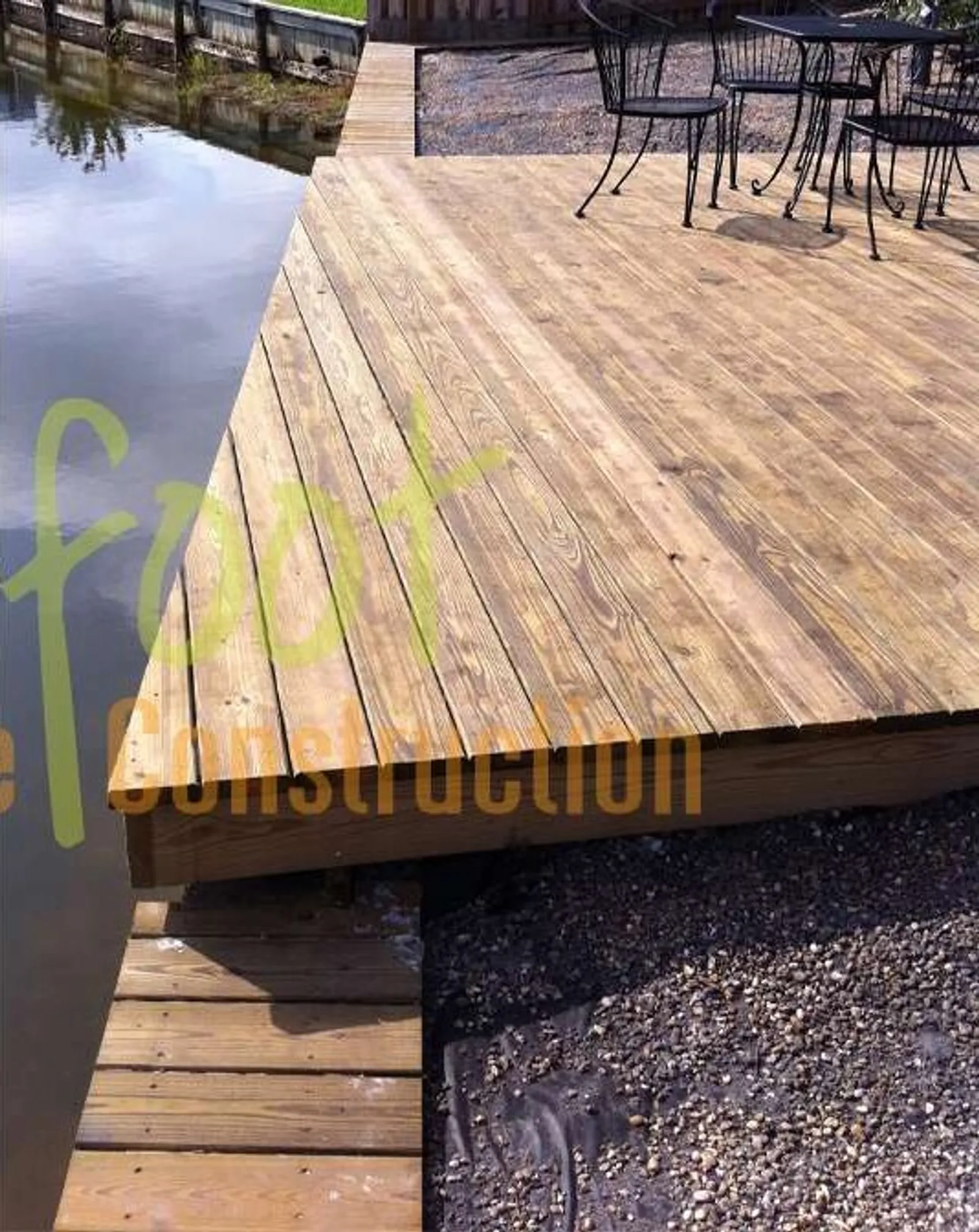
The deck between the house and the water is where most of the time on a waterfront property actually gets spent. It is also the structure most often built by someone who treated it as an ordinary back-yard deck that happens to have a view.
We design and build custom waterfront decks across Duval, Clay, St. Johns and Nassau counties, and we repair a steady stream of ones that were not built for where they are.
Why waterfront decks are different
Salt and humidity. Even landward of the wall, a shoreline deck lives in salt spray and permanent high humidity. Hardware and fasteners that would last decades inland corrode here, and corroded connections are how decks fail — not rotten boards.
Ground that moves. The soil near a wall is the soil most likely to be disturbed, undermined or quietly leaving through the structure. A footing bearing on ground that is washing out through the seawall will settle, and no amount of good framing prevents it. This is why we look at the wall when quoting a deck — and why a deck enquiry sometimes turns up a soil loss problem the owner had not connected to the settling patio.
The tie-in to the wall. Where a deck meets a bulkhead or seawall, two structures with different movements and loads are joined. Done poorly it transfers load the wall was never designed for, or opens a path for water and soil. Done properly it accommodates the difference.
Exposure. Wind, sun and storm. Decks near the water take weather that inland decks do not, and anything you put on them — furniture, screening, a roof — becomes part of that equation.
Designing one around your property
Custom means the layout comes from the site rather than from a pattern. What we establish first:
How you will actually use it. Entertaining a crowd, two chairs and a coffee, somewhere to land between the house and the boat, or all three at different times of day. These produce genuinely different decks and the honest answer shapes everything.
Where the sun is, and when. The single most under-considered input. A west-facing deck with no shade is unusable at exactly the hour most people want to be on it. That is an argument for orientation, for a gazebo or covered section, or for accepting that the space is a morning space.
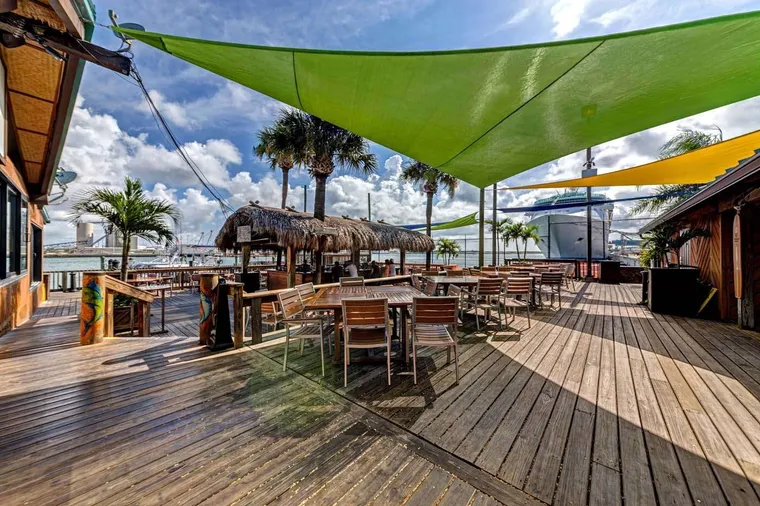
The view, and what blocks it. Deck height, railing choice and any structure all trade against the thing you bought the property for. Worth being deliberate rather than discovering it afterwards.
Levels and transitions. Waterfront lots frequently have a grade change between house and water. Stepping a deck down in levels usually works better than one large platform on tall posts, and it gives you natural zones.
How it meets the dock. The deck-to-dock transition is a routinely awkward detail — tidal elevation change, two structures and often a wall all meeting in one place. Getting it designed rather than worked around is one of the clearest differences between a thought-through project and a bolted-together one.
What goes on it. Railings, lighting, power, built-in seating, storage. All far cheaper provided at build time, when structure and blocking can go exactly where they are needed.
What we build
Shoreline decks — the main gathering space between house and water, landward of the wall.
Multi-level decks — stepping down a grade change in stages, which suits waterfront lots and creates usable zones.
Observation platforms — smaller elevated structures where the view or the drop makes it worthwhile.
Deck-to-dock transitions — the junction between a landward deck and the dock structure.
Decks over or beside walls — subject to assessing what the wall can actually carry.
Platform and stair structures connecting grade levels down to the water.
Materials
Framing and structure carry everything and live in the worst conditions. Specification here determines service life, and it is invisible once the decking is down.
Hardware and fasteners are where marine structures fail first. Marine-rated hardware costs more, does not show in a finished photograph, and is the difference between a deck that is solid in fifteen years and one that is loose in five. This is the question to ask every bidder, and the answers vary more than you would expect.
Decking is the choice you interact with daily — appearance, heat underfoot, maintenance, cost. Timber, composite and hardwood all have a case; what matters is choosing for how you actually use the space. A surface that is pleasant barefoot in August is a different specification from one that looks best in photographs.
Foundations appropriate to soil that may be disturbed, placed with an understanding of what the wall behind them is doing.
Permits
Where the deck sits determines who reviews it. Landward of the wall and clear of regulated areas, it is often a local building department matter. Over water, or within a regulated zone, the marine agencies are involved — see dock permits.
Requirements vary by jurisdiction and are revised periodically. Confirm current requirements with the reviewing agency before planning work. We handle permitting on the projects we build.
Repair and restoration
We also repair and restore existing waterfront decks — framing, decking, hardware, leveling and surface refinishing. The approach is the same as dock repair, and so is the first rule: find out why it moved before putting it back. A deck that has settled because the ground beneath it is leaving through the wall will settle again, however well it is releveled.
Worth restoring, or worth replacing?
Decking and railings are renewable. What decides the answer is the framing and the ground underneath — which is why we look at those first.
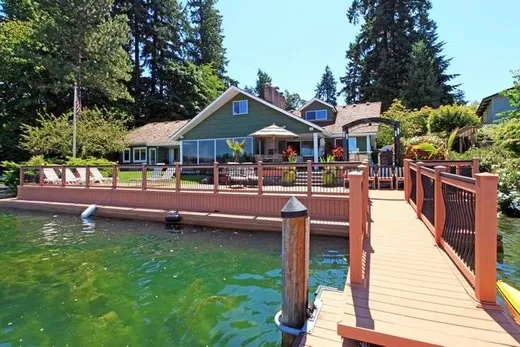 Due for work
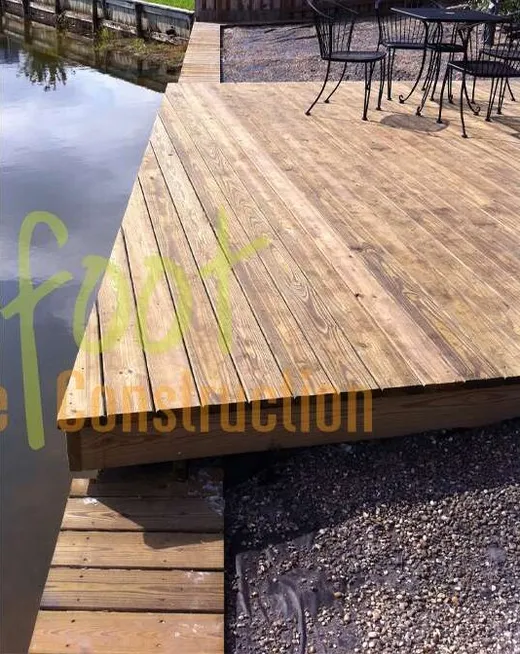 Finished
Doing it with the wall
If the seawall or bulkhead also needs work, doing both in one project is almost always cheaper than two — one mobilisation, one permit process, one disruption, and a tie-in that gets designed rather than negotiated around. It is worth asking about even if you were only thinking about the deck.
Call (904) 327-3931 or request a free estimate.
Frequently asked questions
Can a regular deck contractor build my waterfront deck?
Does a waterfront deck need a permit?
Can you build a deck on top of my seawall?
What decking material is best on the water?
How long does a waterfront deck take to build?
Last reviewed October 2026 by Barefoot Marine Construction. Permit requirements and agency rules change — confirm current requirements with the reviewing agency before you plan work.