Skip to content

Seawalls

Void Filling and Soil Stabilization

Replacing the ground that has already left — and making sure it is capable of carrying load again rather than simply filling a hole.

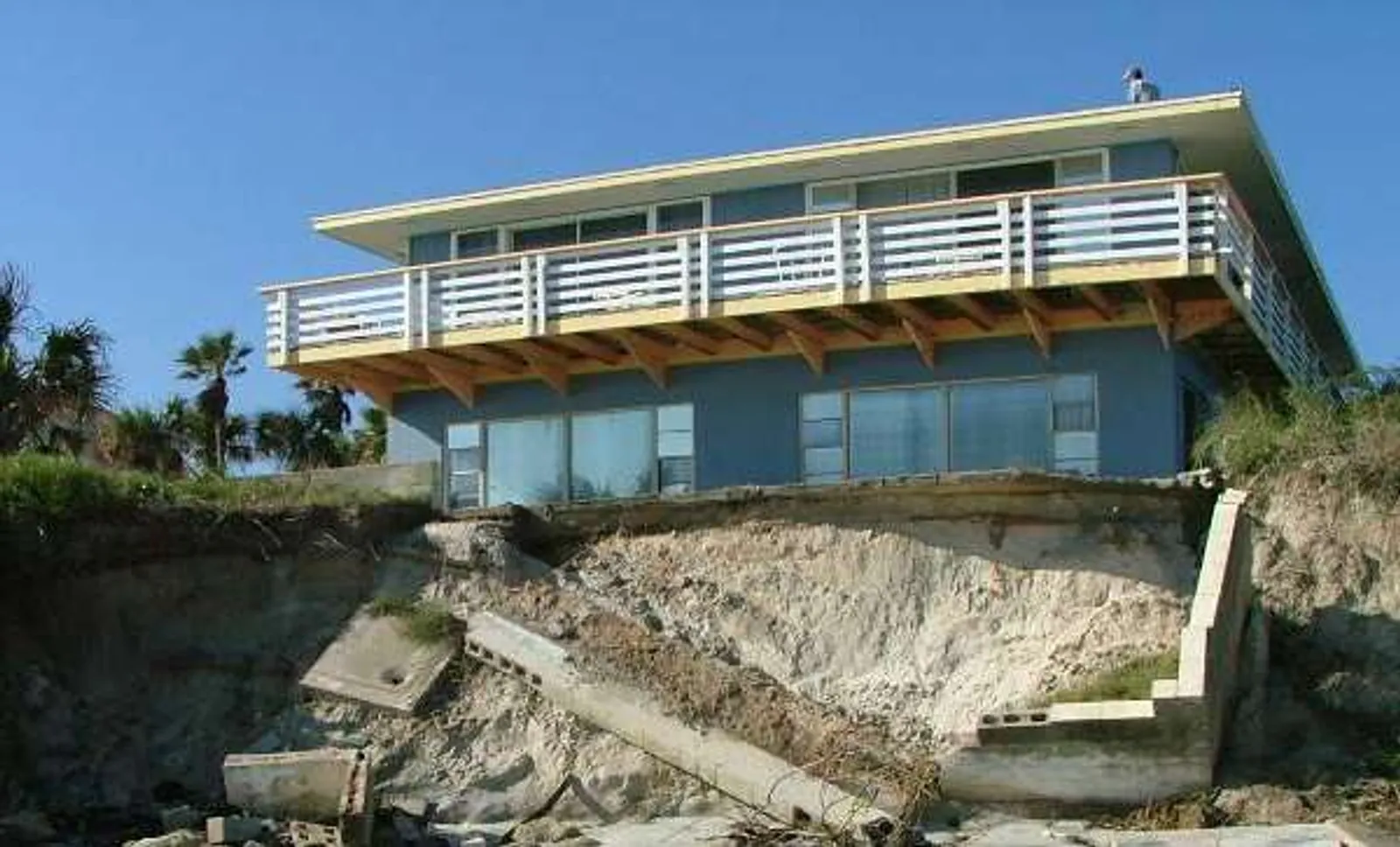
Soil leaves a waterfront property quietly. It goes out through the joints of the wall on falling tides, a little at a time, for years. The first visible sign is usually a depression in the lawn, a settled paver, or a patio slab that has started to tilt.

By then the void underground is normally larger than the hole at the surface, and often there are several — connected to each other and to the same leak path through the wall.
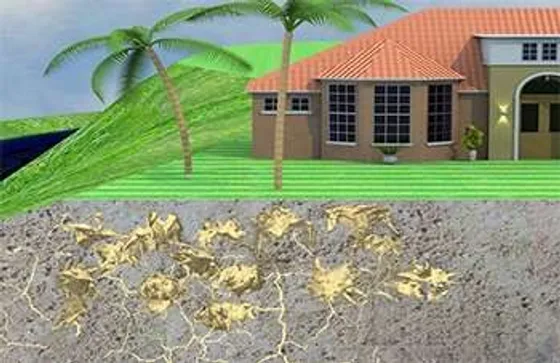
Cut-away diagram of a waterfront home showing voids and cavities in the soil beneath the ground surface Diagram
Voids beneath a waterfront property, in cross-section

What this repair actually does

Two distinct jobs, which is why the page has two names.

Void filling replaces the volume that has been removed, so the ground is solid again where it was hollow.

Soil stabilization improves the material that is still in place but has been loosened and weakened by years of water moving through it. A void is the obvious problem; disturbed, low-density soil around it is the one people miss. New fill placed on weakened ground settles, and then you are back where you started.

Done properly, the zone behind the wall ends up able to carry load again — which matters if there is a patio, a pool deck, a driveway or a structure anywhere near the top of the slope.
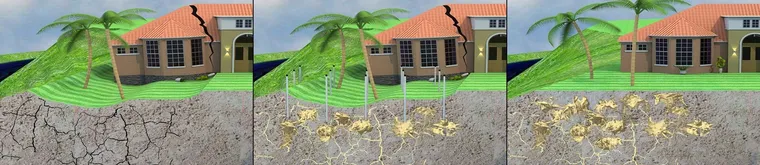
Diagram sequence showing ground cracking and settling beside a building, voids forming beneath it, and the soil stabilised after treatment Diagram
Void formation beneath a structure, and stabilization

Why topping up the lawn does not work

It is the most natural response in the world and it does two unhelpful things.

First, it does nothing about the mechanism. Soil is leaving through the wall. Fill poured in at the top is just more material queued up to leave through the same route. The hole comes back, usually bigger.

Second, loose fill dropped into a void does not restore bearing. The surface looks right and the ground underneath still cannot carry anything.

Owners who top up for a few seasons often arrive at a repair several times the size of the one they would have had at the start.

Sequence: seal, then fill

This is the part that decides whether the repair holds.

  1. Establish the extent. Where the voids are, how far they reach, and where water is moving through the wall. Part of a marine inspection.
  2. Seal the leak path — chemical grout injection closes the route through the wall.
  3. Fill the voids and stabilize the soil so the ground carries load again.
  4. Fix the drainage. If water is still being delivered to the back of the wall by downspouts, irrigation or grade falling the wrong way, the pressure that drove the original problem is still there.
  5. Restore the surface — grade and finish.

Skipping step 2 is the classic and expensive error. New material behind a wall that still leaks becomes the next thing the tide takes.

Where it applies

When it is not the answer

If the wall itself is structurally finished — rotated, tiebacks gone, embedment lost to scour — stabilizing the ground behind it is temporary by definition. The soil will stay put only as long as the wall does. In that case the conversation is about seawall replacement or bulkhead replacement, and we will tell you that rather than sell you the smaller job twice.

If you have depressions near your wall, call (904) 327-3931 or send us photos.

Frequently asked questions

Can I just fill the sinkhole with dirt myself?
You can, and it will look fixed for a while. What it will not do is stop the mechanism — soil is leaving through the wall, and dirt poured into the top of a void is simply more material for the tide to remove. It also does not restore bearing capacity, so a surface that has been topped up repeatedly can still be unable to carry a load. Topping up the lawn is how a small repair becomes a large one.
How do you know how big the void is?
The surface depression is almost never a reliable indicator — voids are usually wider below ground than the hole at the top suggests, and there are often several connected to the same leak path. Establishing the extent before scoping the work is part of the inspection, and it is why we do not price this from a photograph.
What is the difference between void filling and soil stabilization?
Void filling replaces the missing volume. Soil stabilization improves the strength of the material that is still there but has been loosened and disturbed by years of water movement. Most jobs need both: filling the void alone leaves you with new material sitting on weakened ground.
Will the sinkhole come back?
Not if the leak path is sealed as part of the work. If it is not sealed, yes — and that is the single most common reason owners end up doing this twice. Sealing is chemical grout injection, and on nearly every job the two repairs belong together.

Last reviewed October 2026 by Barefoot Marine Construction. Permit requirements and agency rules change — confirm current requirements with the reviewing agency before you plan work.

What customers say about this work

Unedited reviews from our Google Business Profile, where all 22 can be read in full.

Read them on Google
  • Sent an email for a quote to 4 different companies that repair / replace sea walls. Rick emailed me back in under an hour and saw him the next day. He gave me spectacular information on my sea wall and its construction warning signs. It was a pleasure to speak to him and get his professional experience and perspective.

    Steven Mackenzie

    3 weeks ago Google review

  • Rick and crew showed up during a very trying time when our bulkhead contractor, having demolished our existing bulkhead, proceeded to go bankrupt. We were left stranded with no warning and no protection from erosion to our yard.

    Rick's crew immediately went to work stabilizing the shoreline.

    They went above and beyond to work with our previously approved permit and engineering and even used the already purchased vinyl sheeting onsite. We did not feel any stress during the build, the crew showed up every morning on time, and kept the site clean and organized. They actually worked and did not stand around half the day drinking pop and playing with their phone. The price was competitive, the workmanship was excellent, and the billing was always fair and honest - we never felt over exposed. Rick takes a lot of pride in his work and wants his customers to be just as happy. This is our fourth bulkhead and you will not find a better contractor.

    Tom Snyder

    2 years ago Google review

  • When we found a broken bulkhead tieback rod, we were relieved to discover Barefoot Marine, a trusted name in marine construction and bulkhead repair. Rick quickly visited our property and recommended installing new stainless steel tieback rods alongside the old ones, paired with an updated anchor system. This smart, cost-effective solution was less invasive and preserved our seawall’s integrity, adding years to its lifespan. Despite their busy schedule with larger marine projects, Rick kindly worked our bulkhead repair into their timeline. The team’s professionalism, quick response, and solid workmanship shone through, delivering an affordable fix that enhanced the look of our waterfront property. We’re grateful for Barefoot Marine’s reliable service and highly recommend them for seawall repairs, tieback rod replacements, or any marine construction needs. Their quality work and customer care make them a top choice!

    John DeSalvo

    a year ago Google review

Get a free estimate on your project

Send us a few photos and what you're seeing, and we'll tell you what it needs — repair, replacement, or just monitoring.

Certified General Contractor #1533461 · Workers' Comp + USL&H Insured · Serving Northeast Florida since 2009