Skip to content

Bulkheads

Wood Bulkheads

The lowest initial cost of the three materials, a real answer on the right site, and a decision you should make with the service life in front of you.

Timber built most of the older waterfront on the First Coast, and plenty of it is still standing and still doing its job. We build and repair timber bulkheads, and we will give you a straight read on whether it is the right material for your site rather than talking you into something more expensive by default.

Where wood is the right answer

Matching an existing structure. Where you have a sound timber wall and are extending it, or repairing a section, continuing in the same material is normally cleaner and cheaper than introducing a second system and detailing the junction between them.

Sheltered water. Creek frontage and protected shoreline with limited fetch and modest boat wake is a far gentler environment than open river. Exposure is a bigger driver of timber’s service life than almost anything else.

Shorter ownership horizon. If you are not planning to own the property for decades, the lower initial cost can be the rational choice, and pretending otherwise would be dishonest.

Budget reality. A sound timber wall is better than a concrete wall you cannot afford to build this year while the soil keeps leaving. Timber is a legitimate answer to that problem.

What you are accepting

Treated timber in a warm, wet, brackish environment has a finite life. That is not a criticism of the material, it is the condition of the application. What actually determines how long you get:

  • Treatment specification. Timber intended for marine ground contact and timber intended for a deck are different products with different retention levels, and the difference shows up years later.
  • Fasteners and hardware. This is where most timber walls fail first. Corroding fasteners let the wall lose continuity before any board is structurally spent. Hardware specified for a marine environment costs more and is not the place to save money.
  • Tieback hardware. Same issue, higher stakes — tieback corrosion is what rotates the top of a wall.
  • Marine borers. In salt and brackish water, borer activity attacks below the waterline. You do not see it from the cap, which is one of several reasons an inspection looks underwater.
  • Exposure. Sheltered timber lasts materially longer than exposed timber.

How a timber bulkhead is built

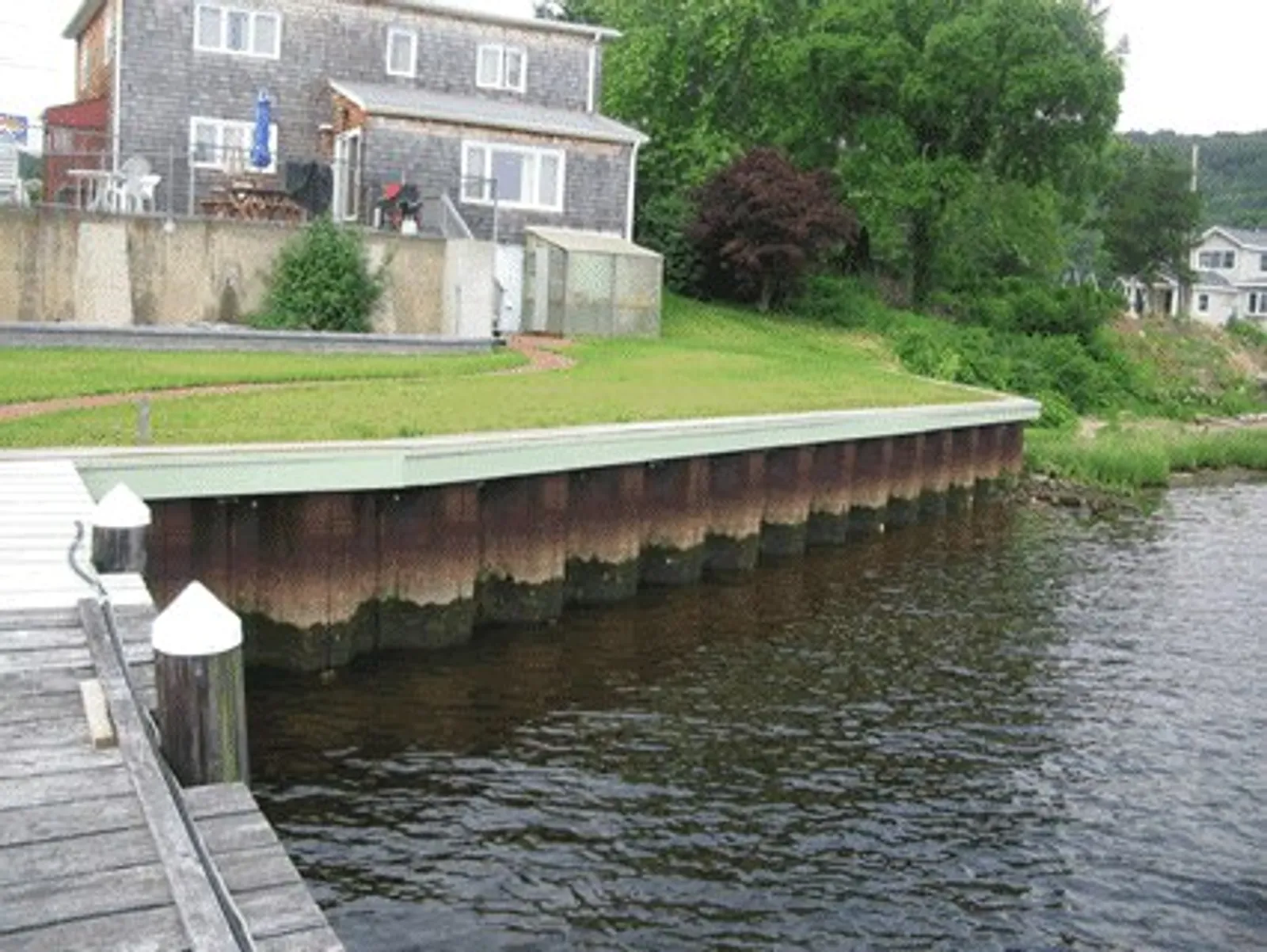
Timber sheet piles or boards driven and set against each other to form a continuous face, backed by wales that distribute load along the wall, tied back to deadman anchors in the yard, with a cap at the top. The filter detail behind the wall matters more on timber than on any other material, because timber walls are not watertight and the water that moves through will take fine soil with it unless the fabric and drainage layer are right.

Repairing rather than replacing

A timber wall with sound piles and a bad top end is often worth repairing. What we do:

  • Replace deteriorated boards and wales
  • Install new tiebacks and anchors where the originals have corroded
  • Jacket or restore piles that still have a sound core
  • Address soil loss and voids behind the wall
  • Repair or replace the cap

What tips it towards replacement is corrosion through the tieback system along the length, borer damage through the piles, or rotation that has already compromised embedment.

The common upgrade path

When a timber bulkhead reaches the end, the most economical replacement on many sites is a vinyl wall driven in front of the existing structure. It avoids demolition, which on a developed waterfront lot is a significant share of the cost. Whether there is room, and whether the permits allow it, is site-specific.

Call (904) 327-3931 or request a free estimate and we will tell you what your wall has left.

Frequently asked questions

How long does a timber bulkhead last in Florida?
Less than vinyl or concrete, and how much less depends on exposure, the treatment specification, water salinity, and whether the fasteners and tiebacks were specified for a marine environment. Rather than quote a number we cannot stand behind for your specific site, we will tell you what we see on comparable walls nearby when we come out — local evidence beats a general figure.
What actually fails first on a wood bulkhead?
Usually the connections rather than the boards. Fasteners corrode, tieback hardware corrodes, and the wall starts to lose its continuity before any individual timber is structurally gone. Marine borer activity below the waterline is the other common finding in salt and brackish water, and it attacks where you cannot see it.
Can a timber bulkhead be repaired or does it have to be replaced?
Both are routine. Isolated board replacement, new tiebacks, and pile repair extend a sound wall. Where the fasteners and tiebacks have gone along the length, replacement is usually the better value — and driving a new vinyl wall in front of a failing timber one is a common and economical way to do it.

Last reviewed October 2026 by Barefoot Marine Construction. Permit requirements and agency rules change — confirm current requirements with the reviewing agency before you plan work.

What customers say about this work

Unedited reviews from our Google Business Profile, where all 22 can be read in full.

Read them on Google
  • Rick and crew showed up during a very trying time when our bulkhead contractor, having demolished our existing bulkhead, proceeded to go bankrupt. We were left stranded with no warning and no protection from erosion to our yard.

    Rick's crew immediately went to work stabilizing the shoreline.

    They went above and beyond to work with our previously approved permit and engineering and even used the already purchased vinyl sheeting onsite. We did not feel any stress during the build, the crew showed up every morning on time, and kept the site clean and organized. They actually worked and did not stand around half the day drinking pop and playing with their phone. The price was competitive, the workmanship was excellent, and the billing was always fair and honest - we never felt over exposed. Rick takes a lot of pride in his work and wants his customers to be just as happy. This is our fourth bulkhead and you will not find a better contractor.

    Tom Snyder

    2 years ago Google review

  • Rick and his team were outstanding in our bulkhead repair. We had another company do a full bulkhead replacement in 2020. The bulkhead failed within months and had to be replaced (again). Same company performed the second replacement, and didn't construct an appropriate anchor/ tie back system, which caused movement in the wall. I hired Rick and his team to come in and repair the existing bulkhead. They created an anchor system that will hold the bulkhead in place well beyond the lifespan of the vinyl pilings they are anchoring. Rick was professional, fair, and his team was very respectful of our property. I give Rick and Barefoot Marine Construction our highest recommendation.

    Matthew McCullough

    a year ago Google review

  • When we found a broken bulkhead tieback rod, we were relieved to discover Barefoot Marine, a trusted name in marine construction and bulkhead repair. Rick quickly visited our property and recommended installing new stainless steel tieback rods alongside the old ones, paired with an updated anchor system. This smart, cost-effective solution was less invasive and preserved our seawall’s integrity, adding years to its lifespan. Despite their busy schedule with larger marine projects, Rick kindly worked our bulkhead repair into their timeline. The team’s professionalism, quick response, and solid workmanship shone through, delivering an affordable fix that enhanced the look of our waterfront property. We’re grateful for Barefoot Marine’s reliable service and highly recommend them for seawall repairs, tieback rod replacements, or any marine construction needs. Their quality work and customer care make them a top choice!

    John DeSalvo

    a year ago Google review

Get a free estimate on your project

Send us a few photos and what you're seeing, and we'll tell you what it needs — repair, replacement, or just monitoring.

Certified General Contractor #1533461 · Workers' Comp + USL&H Insured · Serving Northeast Florida since 2009