Skip to content

Cedar Point · Duval County, Florida

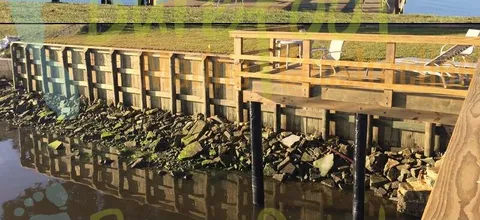
Seawall Construction in Cedar Point

Seawalls built for the specific conditions of Cedar Point's frontage on the Clapboard Creek.

  • Clapboard Creek
  • Nassau River
  • tidal marsh creeks

Barefoot Marine Construction builds and repairs the structures that hold Cedar Point's waterfront in place. We have worked Duval County since 2009 — Certified General Contractor #1533461, carrying Workers' Compensation and USL&H coverage — the federally required cover for maritime work that falls outside state workers' compensation, and the one that actually applies to crews working over water.

This page is about seawall construction specifically in Cedar Point, on the Clapboard Creek. The engineering here is not the same as it is five miles away, and an estimate written without knowing which water your property faces is a guess.

Cedar Point at the water's edge

A seawall is designed around the energy it absorbs, so the design starts with the water rather than with the wall.

Cedar Point occupies the northeastern corner of Duval County, a rural area of tidal creeks, marsh and preserve land between the St. Johns and the Nassau River. It is among the least developed waterfront in the county, with properties scattered along creeks rather than concentrated in subdivisions.

Tidal creek and marsh frontage almost throughout, with very little hard armouring. Navigable water is frequently well out from upland across marsh, and the creeks themselves are narrow and winding.

What the water does here

Low wave energy — the marsh and creek system absorbs almost everything. Tidal current through the creeks is significant given the volume of water moving through the marsh, and it is current rather than waves that shapes these banks.

Full salt exposure. Hardware, fasteners and embedded reinforcement all corrode faster here than on the fresher inland reaches, so specification is a service-life decision rather than a detail. Tidal range is significant. That matters twice over: it drives a large volume of water in and out through any opening in a wall, and it makes a fixed-only dock awkward to board at the bottom of the tide.

Deep marsh organics over sand. This is the defining constraint for anything built here: competent bearing can be well below the surface, and structures founded short of it will settle. For a seawall it drives section selection, how much toe protection the wall needs, and where the cap has to sit to limit overtopping.

Common shoreline problems in Cedar Point

A new seawall on Clapboard Creek, Nassau River, tidal marsh creeks and Intracoastal Waterway has to answer all of these. The ones involving scour and overtopping are the ones most often left out of a cheap design.

  • Creek bank undercutting where tidal current concentrates at bends
  • Marsh-edge retreat on exposed sections
  • Settlement of structures founded in deep organics
  • Limited existing armouring, so natural bank processes run unchecked
  • Storm surge moving through the marsh system during events

Designing a seawall for Cedar Point conditions

A seawall is designed around the energy it has to absorb, and that is why we will not quote one by the foot over the phone. Low wave energy — the marsh and creek system absorbs almost everything. Tidal current through the creeks is significant given the volume of water moving through the marsh, and it is current rather than waves that shapes these banks.

On Cedar Point frontage that drives four things: the section selected, how deep it is embedded, whether toe protection is needed and how much, and where the top of the wall sits relative to design water levels.

  • Fetch and wake exposure specific to your frontage on the Clapboard Creek
  • Embedment depth, with an allowance for scour rather than for soil load alone
  • Toe protection sized for the energy the wall will reflect back into the water
  • Cap elevation and freeboard, set to limit overtopping
  • Tieback spacing and anchor placement outside the active soil wedge

Toe protection is the detail that decides it

A vertical wall reflects wave energy downward into the water at its own base, and that reflected energy excavates the material the wall is embedded in. The wall undermines its own foundation, continuously, and none of it is visible from the top.

Cedar Point does not present seawall conditions. The marsh system means wave energy barely reaches upland, and the force to design against is tidal current at the bank, which calls for different treatment entirely.

If you are comparing estimates for Cedar Point and one of them has no toe protection on exposed frontage, that is the question to ask before you compare the totals.

Materials for this water

Full salt exposure. Hardware, fasteners and embedded reinforcement all corrode faster here than on the fresher inland reaches, so specification is a service-life decision rather than a detail. We build vinyl and concrete seawalls, and the choice turns on exposure, what sits behind the wall, and how long you intend to own the property.

The important qualifier for vinyl is that wave loading is a larger demand than soil retention, so the section has to be selected for it. A profile adequate on sheltered water is not automatically adequate here. The full construction process is here.

Bulkhead concerns in Cedar Point

A new seawall here is also a soil-retaining structure, so the bulkhead side of the problem does not go away. Hard bulkheads are rare and usually unnecessary on Cedar Point creek frontage. Full detail: bulkhead construction in Cedar Point and bulkhead repair.

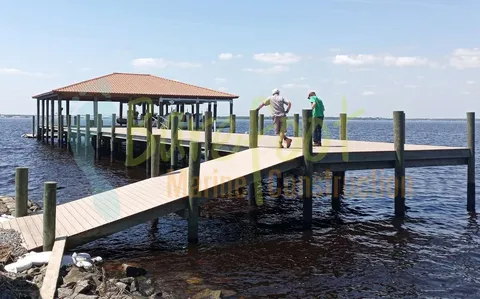
Dock challenges in Cedar Point

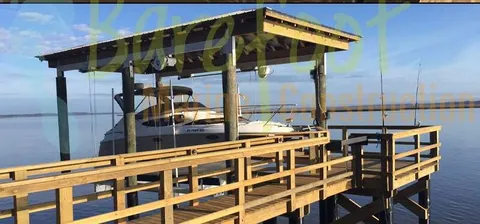
A new wall is the natural moment to resolve a dock tie-in properly rather than working around it. The constraints on this frontage:

More at dock construction in Cedar Point.

  • Very long walkways across marsh to reach navigable water
  • Deep organics requiring substantial pile penetration
  • Heavily regulated marsh and proximity to preserve lands

What we would recommend in Cedar Point

Putting that together for a new seawall here:

Dock work is the dominant need here rather than wall work, and the governing factors are marsh crossing distance and pile penetration through organics. Both drive cost, and both need establishing before a number means anything.

Rural, with extensive marsh and limited road frontage to the water on many parcels. Water-based access is frequently necessary, and distances are longer than in the developed parts of the county.

Permit considerations for seawall construction in Cedar Point

A new seawall is reviewed as new construction, and the toe protection it needs is part of the proposal rather than an afterthought added later.

Extensive marsh and adjacent preserve lands make this one of the more regulated environments in Duval. Establishing what is permittable early is essential rather than advisable here.

Requirements are revised periodically. Treat this as orientation and confirm current requirements with each reviewing agency before planning work. We handle permitting on the projects we build, and agency review is normally the longest item in the schedule.

Filter the full gallery by neighborhood, county and project type.

View all projects

Barefoot Marine's own job photography from across Northeast Florida.

Cedar Point seawall construction questions

How much does a bulkhead cost in Cedar Point?
It depends on retained height, soils, what is loading the ground behind the wall, and how equipment reaches the water — and in Cedar Point, access is a genuine swing factor. Full breakdown for Cedar Point, or the general bulkhead cost page. Estimates are free.
How much does a seawall cost in Cedar Point?
Designing a new seawall, a seawall generally costs more than a bulkhead of the same length on the same site, because it carries work the bulkhead does not: toe protection sized for the exposure, deeper embedment with a scour allowance, and a heavier section for wave loading. On Cedar Point frontage, sheltered water where wave energy is minimal and other failure mechanisms dominate, which is what drives that difference. Demolition of an existing wall and permitting are the other two line items worth stated explicitly rather than discovered later.
How long do seawalls last in Florida?
Designing a new seawall, the answer is a range rather than a number — two walls built the same week in the same material can be decades apart. What decides it: toe protection and whether scour was allowed for, drainage behind the wall, corrosion protection on the tieback hardware, and whether anyone has looked at it in the last five years. In Cedar Point specifically, full salt exposure accelerates corrosion of hardware and embedded reinforcement, which shortens the clock for any given specification. More on what actually determines it.
Do I need permits for a dock in Cedar Point?
Yes, and usually from several agencies at once. Extensive marsh and adjacent preserve lands make this one of the more regulated environments in Duval. Dock permitting in Cedar Point, or who reviews what. Confirm current requirements with the reviewing agency.
Can a seawall be repaired?
Usually — repair is a fraction of replacement when the piles, embedment and tiebacks are still sound. What that looks like in Cedar Point.
What causes bulkhead failure?
Soil loss through joints, tieback corrosion, toe scour, and chloride attack on the cap — usually several at once. How that plays out in Cedar Point.
What is the best bulkhead material?
No single best — for most Cedar Point frontage, tied-back vinyl is the starting point, with concrete where surcharge load is real. Material choice for Cedar Point.
What is the best seawall material?
The same honest answer, with one addition specific to seawalls: whatever material you choose, the section has to be selected for wave loading rather than for soil retention, and the toe has to be protected. Cedar Point frontage is sheltered enough that a heavy wave-resisting specification would be paying for a load case the site does not deliver, and we would tell you that rather than sell it. Concrete brings mass and stiffness; vinyl cannot corrode. Neither protects against scour on its own.

Nearby waterfront communities

We work the whole of this stretch. Conditions change between these communities — sometimes a lot.

Last reviewed November 2026 by Barefoot Marine Construction. Permit requirements and agency rules change — confirm current requirements with the reviewing agency before planning work.

Seawall Construction in Cedar Point — free estimate

We work Duval County waterfront from our base in Jacksonville. Tell us what you are seeing and we will tell you what it needs.

Certified General Contractor #1533461 · Workers' Comp + USL&H Insured · Serving Northeast Florida since 2009