Skip to content

Barefoot Marine project · Jacksonville, Duval County, FL

New Bulkhead With a Deck Built Over It

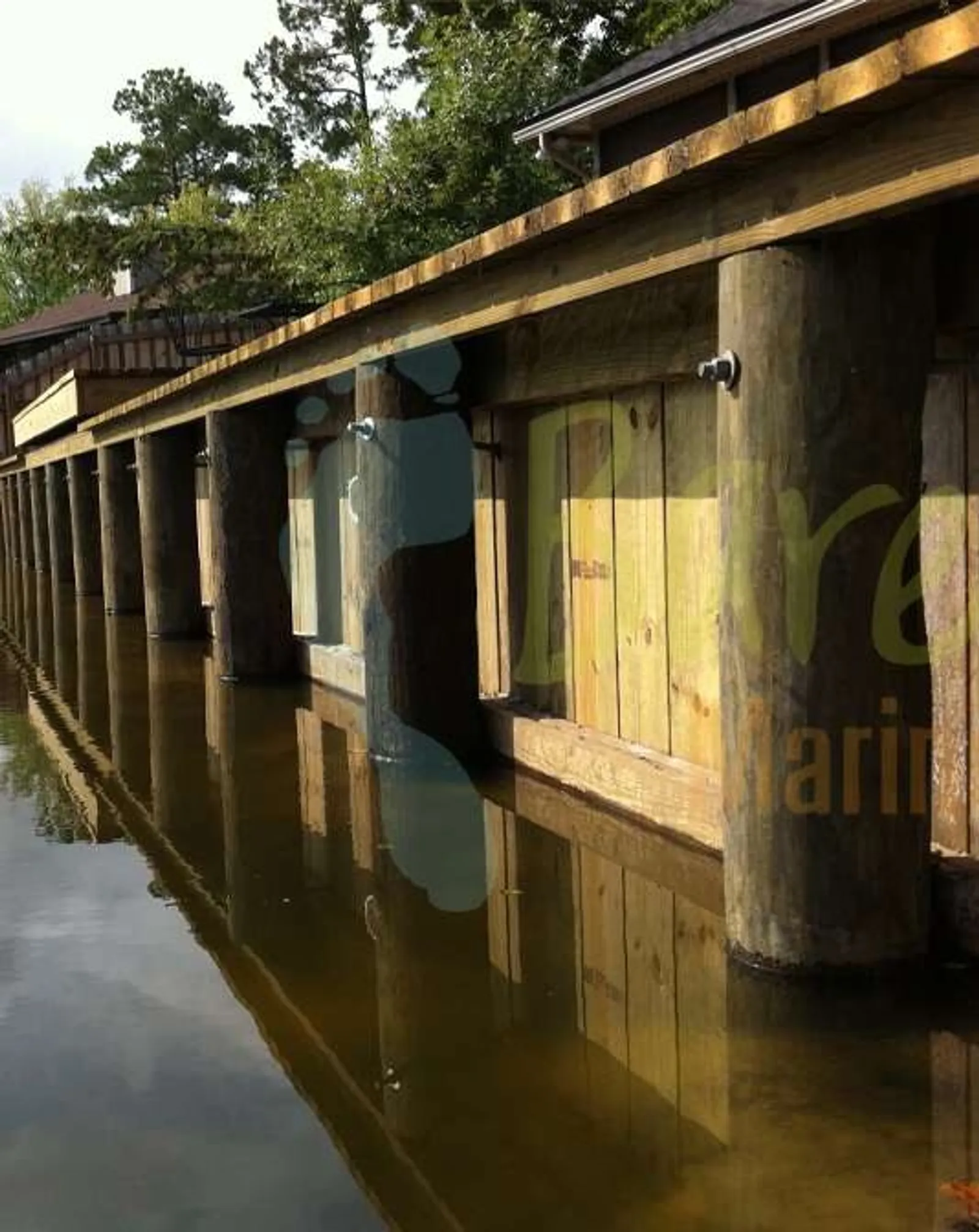
A new timber bulkhead on a dark, tannic Jacksonville waterway, with a timber deck built out over it. The wall holds the ground back; the deck puts the ground to use.

  • Bulkhead Construction
  • Custom Waterfront Decks
  • Pile Driving

A new timber bulkhead with a timber deck built out over it, on one of Jacksonville’s dark, tannic waterways.

A wall that has to carry something

Most bulkheads do one job: hold the ground back. This one also carries a deck, and that changes the specification rather than just adding to it.

A plain retaining wall resists one dominant force — the soil pushing out from behind it, plus the water pressure in that soil. Put a deck on top and the wall’s piles pick up vertical load, and the deck’s own posts either land on the wall or land behind it and need their own foundation. Which of those you choose is the real decision, and it is much cheaper to make before the wall is built than after.

Building the two together means the wall’s piles are sized once, for everything they will eventually carry. Retrofitting a deck onto a wall built for soil alone is the version of this that costs money, because the answer is often that the existing piles will not take it.

Tannic water and what it tells you

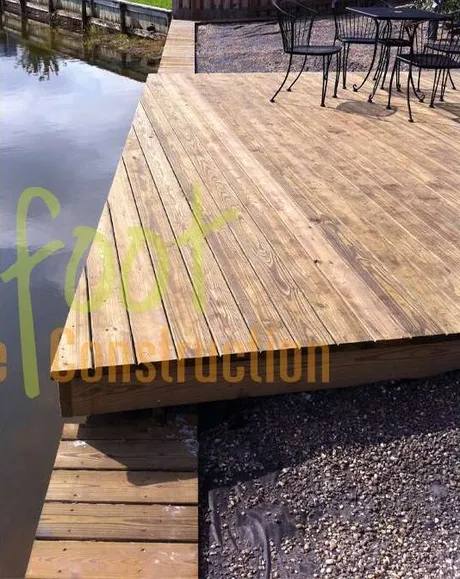
The water in the first photograph is near-black. That is tannin — organic acid leached from vegetation, characteristic of the creeks and blackwater reaches feeding the St. Johns. It matters for two reasons.

It is low-salinity water, which is gentler on steel fixings than the brackish and salt reaches downriver, and it is why timber remains a sensible wall material here where it would be a shorter-lived choice closer to the Intracoastal. The trade-off is marine borers: fresh and low-salinity water keeps the worst of them away, which is one of the main things in timber’s favour on a waterway like this. Our wood bulkheads page sets out where timber is the right call and where it is not.

It also means slack water. A creek reach with water that still carries no energy of its own; the loads on this wall are soil and groundwater, not wave action. That is a bulkhead problem rather than a seawall problem, and the difference between the two decides the whole scope.

The deck

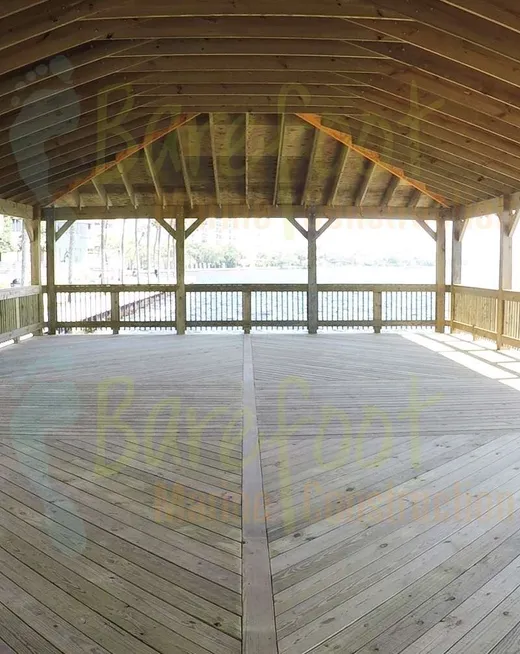
The second photograph shows the finished deck with furniture out on it, boards running on the diagonal, and gravel at the landward edge where the deck meets the ground.

The diagonal board run is worth a note. It is a visual choice, but it also means every board bears on more joists than a square run would, and every cut at the edge is a mitre. It costs more in labour and material than a straight run and it is one of the things that distinguishes a built deck from a kit. More on how these go together on the custom waterfront decks page.

This project in photographs

Barefoot's own job photography. Captions describe what is in each frame.

  • Timber waterfront deck with café tables and chairs set out along its edge
    Finished waterfront deck with seating

Other projects
Last reviewed October 2026 by Barefoot Marine Construction.

Want your project on this page?

Free estimates across Duval, Clay, St. Johns and Nassau counties.

Certified General Contractor #1533461 · Workers' Comp + USL&H Insured · Serving Northeast Florida since 2009