Skip to content

Barefoot Marine project · Jacksonville, Duval County, FL

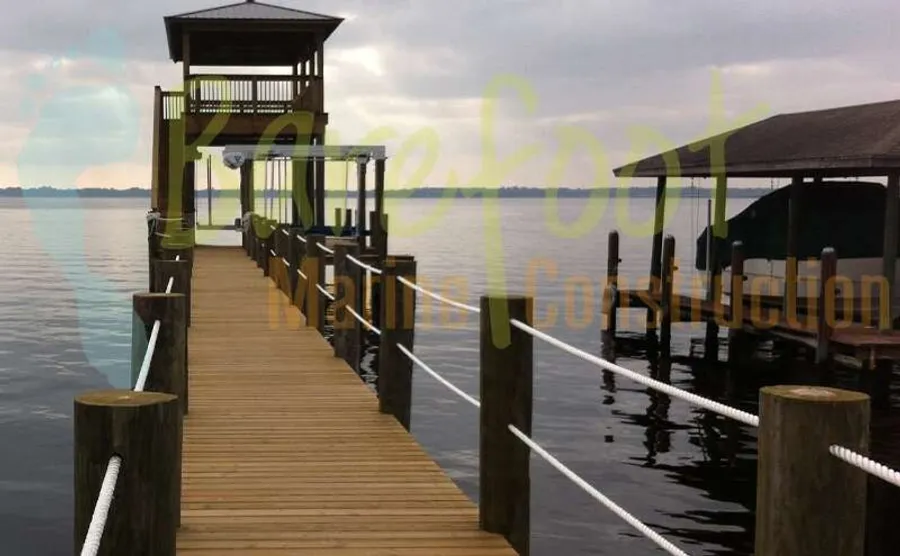
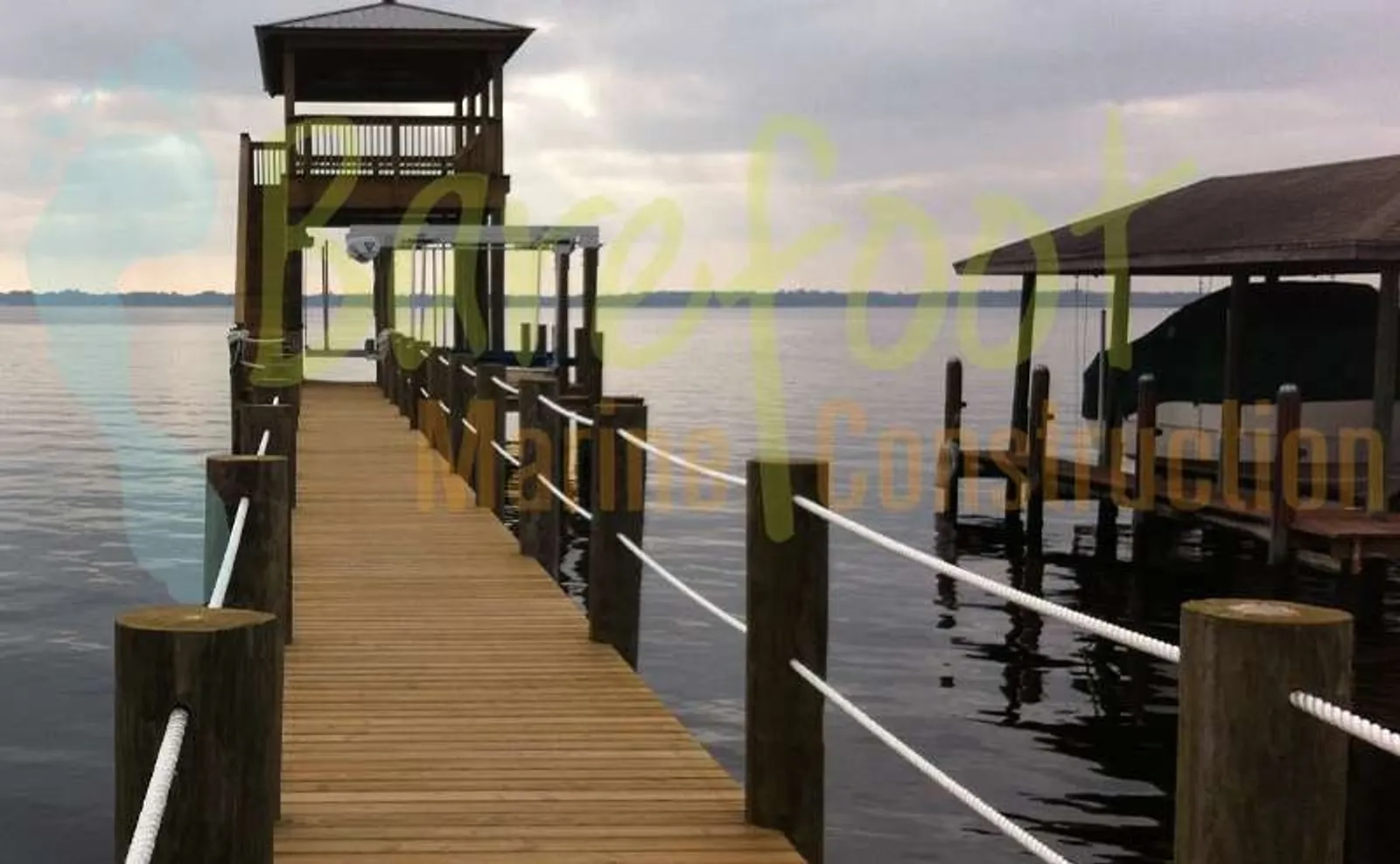
Dock Walkway With an Observation Tower and Boathouse

A timber walkway on round piles, rope railings either side, running out to a two-storey covered tower — with a boathouse and a vessel under cover alongside it.

  • Dock Construction
  • Boathouses
  • Handrails and Railings
  • Pile Driving

A timber dock walkway running out across open water to a two-storey covered tower, with rope railings along both sides and a boathouse alongside carrying a vessel under cover.

Three structures on one set of piles

What makes this dock unusual is that it does three separate jobs. The walkway gets you out to navigable water. The tower at the end is a place to sit above the water with a roof over it and a railed upper deck. The boathouse alongside keeps a vessel out of the water and under cover.

Each of those has a different load case, and they share a foundation. The walkway carries foot traffic. The tower carries its own two storeys plus an open roof that behaves as a sail. The boathouse carries a roof and a lift with a hull on it. Designing them as one structure means the piles under each section are sized for what that section actually does, rather than everything being built to the heaviest case or — the more common failure — everything being built to the lightest.

The tower is the hard part

A two-storey covered structure at the far end of a walkway is the most demanding thing in this photograph. It is the tallest element, it is the furthest from shore, and the upper deck means wind gets at it from below as well as across.

Height multiplies the overturning moment at the pile heads: the same wind pressure applied higher up levers harder on the foundation. So the piles under a tower are generally deeper, sometimes larger in section, and frequently braced differently from the rest of the dock. The reasoning is the same one set out on our gazebos and covered structures page, with the loads scaled up by the second storey.

Rope railings

The railings here are rope — thick white line strung through round timber posts, with the slight catenary sag that tells you it is rope rather than tensioned cable.

Rope and cable solve the same problem: a guard that does not block the view, which on a waterfront property is frequently the entire reason for building out over the water. They differ in how they behave. Cable is tensioned and stays geometrically straight, which looks more precise and needs periodic re-tensioning. Rope has give, which is forgiving and reads as softer, and it is more prone to going slack and looking tired if the posts move at all.

Either way the load goes into the posts and end fittings, not the line. An under-built post at the end of a run is what makes a rope or cable rail sag within a couple of seasons, and it is the thing worth spending money on. Codes also treat rope and cable guards differently from solid infill where a guard is required — confirm with the reviewing department before assuming either satisfies it. More on this on the handrails and railings page.

This project in photographs

Barefoot's own job photography. Captions describe what is in each frame.

  • Timber dock walkway with round piles and white rope railings running out to a two-storey covered observation tower, with a boathouse and a vessel under cover alongside
    Dock walkway with rope railings, observation tower and boathouse

Other projects
Last reviewed October 2026 by Barefoot Marine Construction.

Want your project on this page?

Free estimates across Duval, Clay, St. Johns and Nassau counties.

Certified General Contractor #1533461 · Workers' Comp + USL&H Insured · Serving Northeast Florida since 2009