Skip to content

Barefoot Marine project

Boathouse and Boat Lift Over Open Water

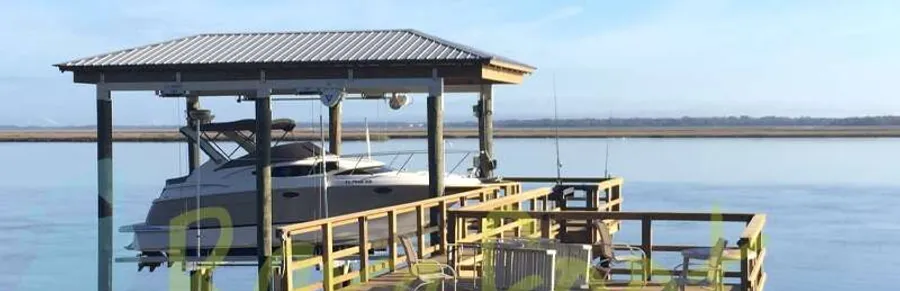
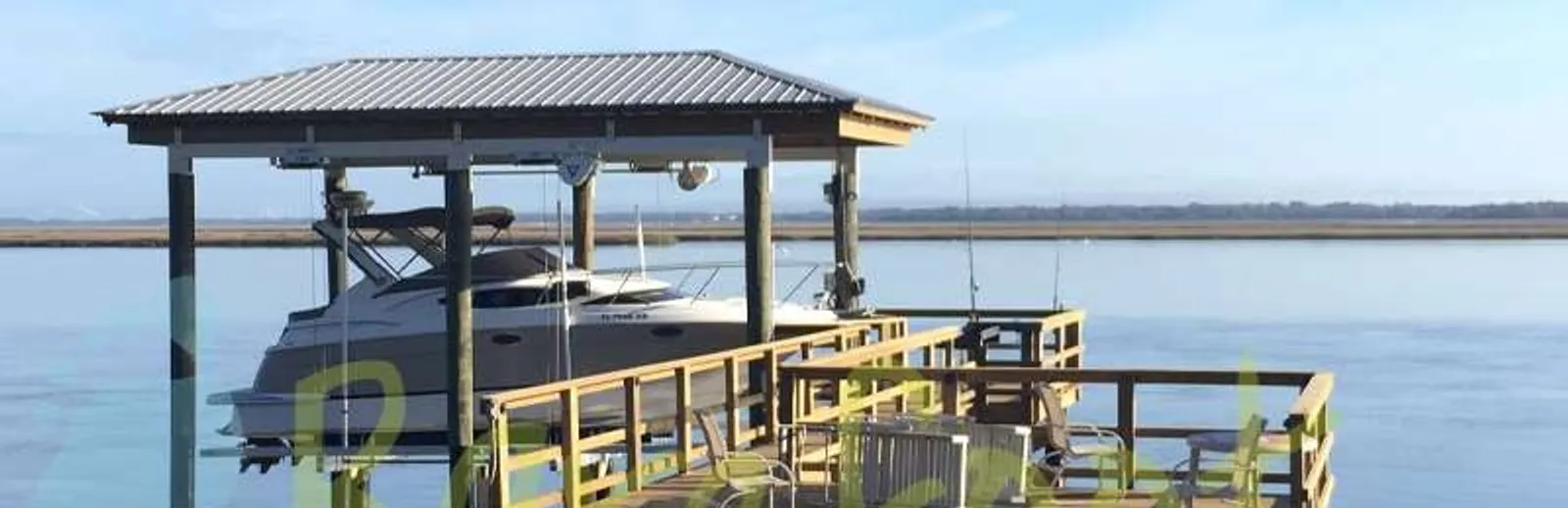
A metal-roofed boathouse over shallow, exposed water, with a vessel on a lift beneath it and a railed timber dock running alongside — a covered structure in a position with nothing to break the wind.

  • Boathouses
  • Dock Construction
  • Boat Lifts
  • Pile Driving

A metal-roofed boathouse with a boat lift under it, and a railed timber dock running alongside, built over broad open water.

Why the position matters more than the span

The thing worth noticing in these photographs is what is not in them. There is no tree line, no bluff, no neighbouring structure, and the far shoreline is a low marsh edge a long way off. The water is wide and shallow.

That makes this an exposed position, and exposure is the governing fact for a covered structure. A boathouse tucked into a creek with trees on both banks sees a fraction of the wind that one in open water does. Here there is nothing upwind to slow anything down, which puts the roof’s uplift load — not its weight — at the centre of the design.

The load path, roof to mudline

Wind moving across and under an open-sided roof lifts it. The structure survives or fails on whether there is a continuous, uplift-rated load path from the roof covering, through the purlins and rafters, through every connection, into the posts and down the piles. Any single under-rated connection in that chain is the whole structure’s rating.

This is why the pile question gets settled before the roof is designed rather than after. The piles under a boathouse carry the dead load of the structure, the live load of a vessel on a lift, and an uplift and lateral component from the roof that an open dock’s piles were never sized for. On shallow water the piles also have less embedment available for the same length, which tightens the problem further. The reasoning is set out at length on our boathouse construction page.

The lift under the cover

Putting a lift inside a boathouse is the right call for a vessel that lives at the dock. The lift takes the hull out of the water, which stops growth and slows corrosion; the roof then keeps sun and rain off everything the lift has raised, which is what protects canvas, upholstery, electronics and finishes.

The cost of combining them is that the same piles now carry the structure and the lift’s working loads together. Both have to be in the calculation from the start — a lift added to a boathouse later is a question about the existing piles, not a question about the lift. That is the usual subject of our boat lift and boathouse service calls.

The railings

The dock alongside carries a timber guard rail. On a structure this far out, railings are not a detail: they take real load from people leaning and from vessels coming alongside, and in brackish water they fail at their fixings long before the rail itself gives up. The handrails and railings page covers which part of a railing job actually decides how long it lasts.

This project in photographs

Barefoot's own job photography. Captions describe what is in each frame.

  • Boathouse with a metal roof and a vessel on a boat lift, with timber dock railings running out over calm water
    Boathouse, boat lift and dock railings

Other projects
Last reviewed October 2026 by Barefoot Marine Construction.

Want your project on this page?

Free estimates across Duval, Clay, St. Johns and Nassau counties.

Certified General Contractor #1533461 · Workers' Comp + USL&H Insured · Serving Northeast Florida since 2009